



























Camcode durable bar code solutions image description
  • Search
  • Blog
  • About Us
  • Contact Us
Call Toll-Free 800-627-3917
  • Request a Quote
  • Get Samples
  • Industries
    • Healthcare
    • Education
    • Government
    • Warehouse
    • Defense
    • Oil and Gas
    • Utility
    • Telecom and Cable
    • Manufacturing
  • Resources
    • Case Studies
    • Specification Sheets
    • Industry Partners
    • Industry Resources
    • Label Application Instructions
    • Metalphoto Overview
    • Metalphoto Specifications
    • Metalphoto Performance
    • Electronic Artwork Submittal
  • Services
  • Home
  • Asset Tags
  • UID Labels
  • Warehouse Labels
  • Utility Asset Tags
  • Other Tags & Labels
    • CMMS Asset Tags
    • LDAR & Steam Trap Tags
    • Traffic Sign Asset Tags
    • Durable Bar Code Labels
    • Work In Process Labels
    • Laser-Markable Labels
    • High Heat Bar Code Labels
    • Paint-Resistant Bar Code Labels
    • Security Labels & Tags
    • Cable Labels
    • Cylinder Tracking Bar Code Labels
    • UDI Labels

Home /

Blog

Pros and Cons of Different Anti-Counterfeit Marking Methods

  • December 10, 2012
  • Posted by Rob Leibrandt in New Technology, Services
  • Tweet
  • Tweet

Counterfeit products in the defense and aerospace industries can put people at risk and cost organizations, companies and tax payers billions of dollars each year. As the introduction of counterfeit parts into global supply chains continues to rise, the need for anti-counterfeiting techniques becomes more necessary. This is particularly true where commercial products are integrated into defense and aerospace systems.

New technologies and methods are being developed to help combat counterfeit parts in all industries, including the defense and aerospace industries. It’s important to understand which technique is most appropriate when considering environmental conditions, sector practices, existing or new infrastructure requirements, and marking capability with in those industries.

DNA Marking is one the newest sets of marking and identification solutions that is being considered in anti-counterfeit techniques. DNA Marking is an autonomous method, meaning it can be confirmed without the need for external information traceability. This approach requires a tamper-proof unique mark that is not able to be duplicated. Other types of autonomous marks include Nanocodes™ or Nanotubes, Molybdenum Ionic Film, Taggants, surface mapping, and unique material composition.

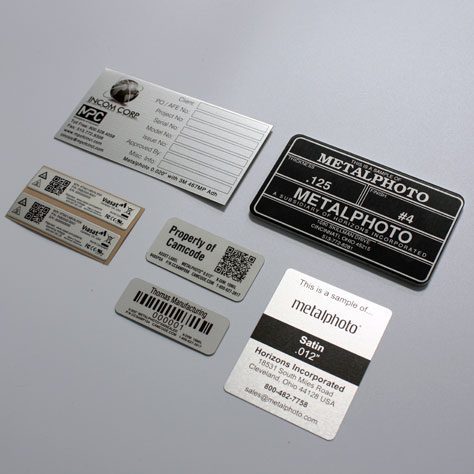
Another marking method is reliant on external information to confirm authenticity. This requires a durable and tamper-resistant mark based on an International Standards approach to establishing Unique Identification (ISO 15459) through a Unique Item Identifier (UII). With reliant marks, authenticity of an item is confirmed by relating the UII to supply chain data, which provides a traceable and auditable assurance of authenticity. Reliant marks may include both overt and covert or hidden features to increase item authenticity. Examples of reliant marks include direct part marking, Metalphoto® Labels, and other established marking methods.

Both autonomous and reliant marking are important techniques to the future of anti-counterfeiting in the defense industry. The following is a description of some advantages and disadvantages to both autonomous and reliant approaches to marking, identification and authenticity.

Autonomous

The advantages of autonomous marking include production of real-time results and tamper-resistant qualities that enhance authenticity. In addition, autonomous marking does not require access to outside data sources to confirm authenticity.

However, there are drawbacks to autonomous marking. First is the cost. Application costs are potentially high in both low and high volumes. Infrastructure costs are taken on at each point where identification is authenticated. And since there may be no visual cues to further enhance security, authenticity must be assumed unless the user has the technical data and expertise to locate such marking. The trouble with these approaches is they are not determinable by existing infrastructure and are not accepted as common practice within industry.

Durability is another disadvantage to autonomous marking. Autonomous marks such as DNA, Nanocodes and taggants are all “added” to the item and are not considered “inherent”. It has not been determined how durable a DNA mark can be, and it is likely poor in high temperature, high abrasion settings or when in contact with lubricants, chemical cleaners, etc.

Another disadvantage is the limited availability of both application and “reading” devices for autonomous marking. Furthermore, it will require new work instructions to identify location and training for handling new equipment.

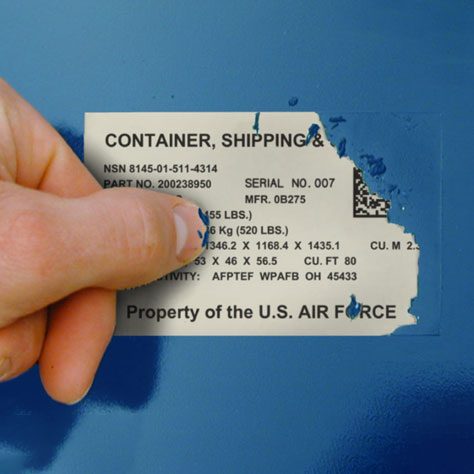
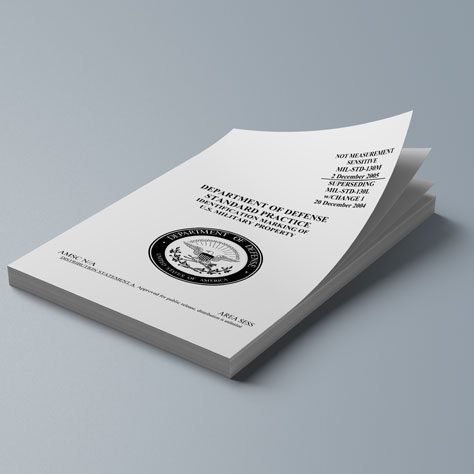
Current mandatory U.S. Department of Defense (DoD) policy requirements do not recognize DNA marking as satisfying the requirement for item level traceability, nor does DNA marking meet the ISO requirements of ISO 15459 for establishing a UII. The DoD’s Unique Identification requirements include DODI 4151.19, “Serialized Item Management”; DODD 8320.03, “Unique Identification”; DODI 8320.04, “Item Unique Identification (IUID)”; and MIL-STD-130, “Identification Marking of U.S. Military Property”. The only data carrier accepted for compliance to these requirements is an ECC 200 Data Matrix symbol encoded in accordance with ISO 15434.

Reliant

Cost efficiencies are one advantage of reliant marking. These systems are built on existing marking infrastructure with time-proven technologies, and use marking approaches that are currently applied to most products that have any traceability requirement, which could include micro electronics and similar items.

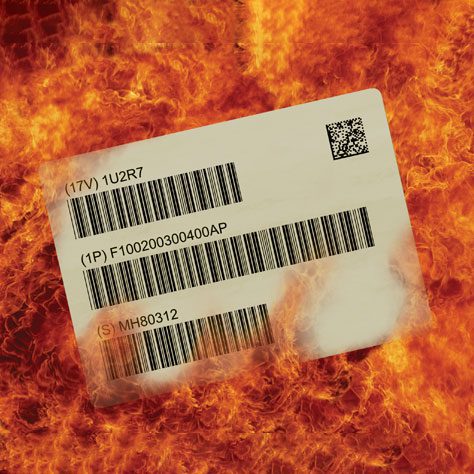
Durability is known and proven in reliant marking. Some of these methods can also leverage both visual and covert features throughout the lifecycle.

Reliant marking reduces training requirements and process changes because it relies on proven technologies and lifetime durability. The mandatory DoD policy requirements already exist for items which require item level traceability as stated above, and require reliant marks.

One disadvantage to reliant marking is that it only provides near real-time results with reasonable communications or a local cache option. In addition, it does have a marking signature versus fully covert systems, like those found in Autonomous marking.

Conclusion

The defense industry’s legitimate anti-counterfeiting needs must consider a variety of marking methods. While there are considerable advantages to an autonomous marking approach, it is not a sufficient marking method for defense suppliers to manage providers, nor is it adequate to meet the more broad needs of a diverse supply chain. Yet, Autonomous marking approaches should be considered as additive marks where appropriate to provide an additional level of authenticity. For example, to provide a covert mark for authentication when suspicion of counterfeiting is identified.

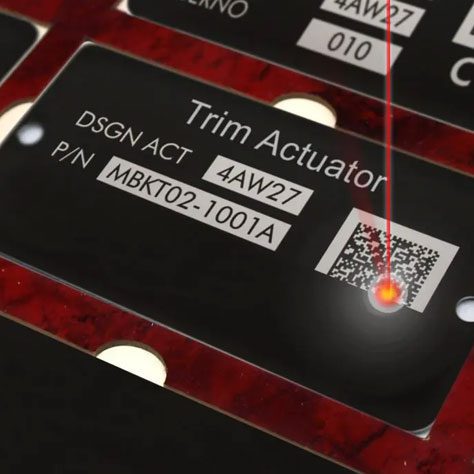
Adjustments to existing reliant marking techniques can provide both visual and covert/hidden authenticity cues, while meeting existing industrial marking requirements and supporting mandatory DoD and NATO IUID/UID Requirements. For example, the photographic quality resolution of Metalphoto and the sub-surface image that results from the Metalphoto process is nearly impossible to fully replicate with other marking methods. Thus, a surface-printed counterfeit metal label would be easy to spot. Reliant techniques also limit cost impacts on both application and infrastructure required by leveraging those existing requirements. The knowledge, practices, tools, and software are already in place to accomplish this work.

Additional industry dialogue is needed on a more achievable and inter-operable approach, as well as a comprehensive study of the alternative approaches described above and others that may exist. Camcode is committed to provide more information on this topic as we continue to participate in the advancement of anti-counterfeiting measures.

Related posts:

  1. Anti-Counterfeit Measures Help Defense Industry Supply Chain
  2. Rob Leibrandt Named Senior Market Manager at Camcode

Tagged as: anti-counterfeit, anti-counterfeiting measures, UID anti-counterfeit

Tags:

anti-counterfeit, anti-counterfeiting measures, UID anti-counterfeit

2 Comments

{ 2 comments… read them below or add one }

Shawn Woolard December 11, 2012 at 12:05 am

I think this DNA marking is one of the best solutions. These counterfeits should be always given proper combat. Thanks for sharing this very informative article!

Reply

Rob Leibrandt December 18, 2012 at 1:31 pm

Thanks for your comment, Shawn. There is not a “one size fits all” approach as can be demonstrated by the recent semiconductor industry negative response to the Defense Logistics Agency attempts to mandate DNA marking for microelectronics. Even as large as DoD is, it has little direct influence on an industry as large as Microelectronics. DoD risks paying extraordinary costs for the disruption non-standard techniques will incur on products DoD purchases. As a former DoD policymaker, I firmly believe that only through active engagement with the affected industry can government policymakers understand and embrace their current practices and have a meaningful dialogue about additional viable and cost effective anti-counterfeit marking methods for that industry and their customers. As the need for anti-counterfeit methods continues to grow we will continue to be part of that conversation. Thanks for your input.

Reply

Cancel reply

Leave a Comment

Previous post: Twelve Common Misconceptions of Item Unique Identification (IUID) Implementation

Next post: Cash Me If You Can (Infographic)

Related posts:

  1. Anti-Counterfeit Measures Help Defense Industry Supply Chain
  2. Rob Leibrandt Named Senior Market Manager at Camcode
  • Categories

    • Asset Tags (14)
    • Barcode Labels (10)
    • CMMS Asset Tags (5)
    • LDAR Tags (2)
    • Metalphoto Barcode Labels (1)
    • New Technology (3)
    • Other (1)
    • Services (1)
    • Traffic Sign Asset Tags (4)
    • UDI for Medical Devices (2)
    • UID Labels (20)
    • Utility Asset Tags (4)
    • Warehouse Labels (8)
  • Search

  • Recent Posts

    It’s Already Time for Schools to Plan for Next Year

    Tweet Tweet For schools, colleges and universities, “next year” is right around the corner. Though most schools are still finishing … More »

    Posted on May 7, 2013

    Latest Update on the 2013 UID Forum

    Tweet Tweet I’ve had a number of inquires about the UID Forum and have heard lots of rumors.  One such rumor … More »

    Posted on April 4, 2013

    How UID Can Add Value to Business Processes

    Tweet Tweet There is value in Item Unique Identification (IUID) beyond simple compliance with Mil-Std-130. Utilizing UID Labels, organizations can … More »

    Posted on March 27, 2013

  • Request a Quote
    Get Samples
    Contact Us
  • ARCHIVES

    • May 2013
    • April 2013
    • March 2013
    • February 2013
    • January 2013
    • December 2012
    • November 2012
    • October 2012
    • September 2012
    • August 2012
    • July 2012
    • May 2012
    • March 2012
    • February 2012
    • January 2012
    • December 2011
    • November 2011
    • October 2011
    • August 2011
    • July 2011
    • June 2011
    • May 2011
    • April 2011
    • March 2011
    • January 2011
    • October 2010
    • August 2010
    • April 2009
Contact Us
Camcode Division of Horizons Incorporated 18531 South Miles Road Cleveland, Ohio 44128
Tel:
800-627-3917
Fax:
216-587-4719
What's Next?

  • Request a Quote
  • Get Samples
  • Contact Us
Keep up to date on the latest from Camcode
Follow Us On...
  • Twitter
  • Facebook

Subscribe to our newsletter to learn about the latest product solutions for your industry!

© Copyright 2011 Horizons, Inc. - All Rights Reserved
Privacy Policy  |  Terms of Service  |  Sitemap